
A common argument from the spending lobby is that the government needs to start making the “rich” pay more in taxes. They claim the rich get away with paying little or nothing, and that if the government fixed that problem, it could solve many of the country’s challenges.
It is a standard argument, and it resonates with some people. “Tax the rich” may sound good on a bumper sticker, but the truth is that the argument just isn’t accurate.
In a recent study published by the Washington, D.C. based Tax Foundation, researchers found that the top 1 percent of taxpayers, about 1.5 million tax returns, accounted for nearly as much income tax paid as the bottom 95 percent combined, or about 145 million tax returns. The report further found that the top 1 percent of taxpayers paid $823 billion in income taxes, while the bottom 95 percent paid $872 billion.
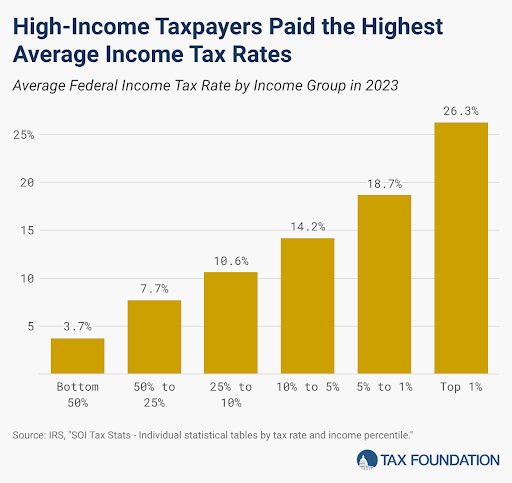
When it comes to tax rates, the report found that high-income taxpayers paid the highest average income tax rates in the country. The bottom half of taxpayers, those making under $53,801, faced an average income tax rate of 3.7 percent. Meanwhile, the top 1 percent, those with an adjusted gross income of at least $675,602, paid an average rate of 26.3 percent, or about seven times the rate paid by the bottom half of taxpayers.
There is one caveat. The super wealthy, or the top 0.001 percent of taxpayers, representing 1,531 returns, paid an average tax rate of 23.6 percent on their income. That is still about six times the average rate paid by the bottom half of taxpayers.
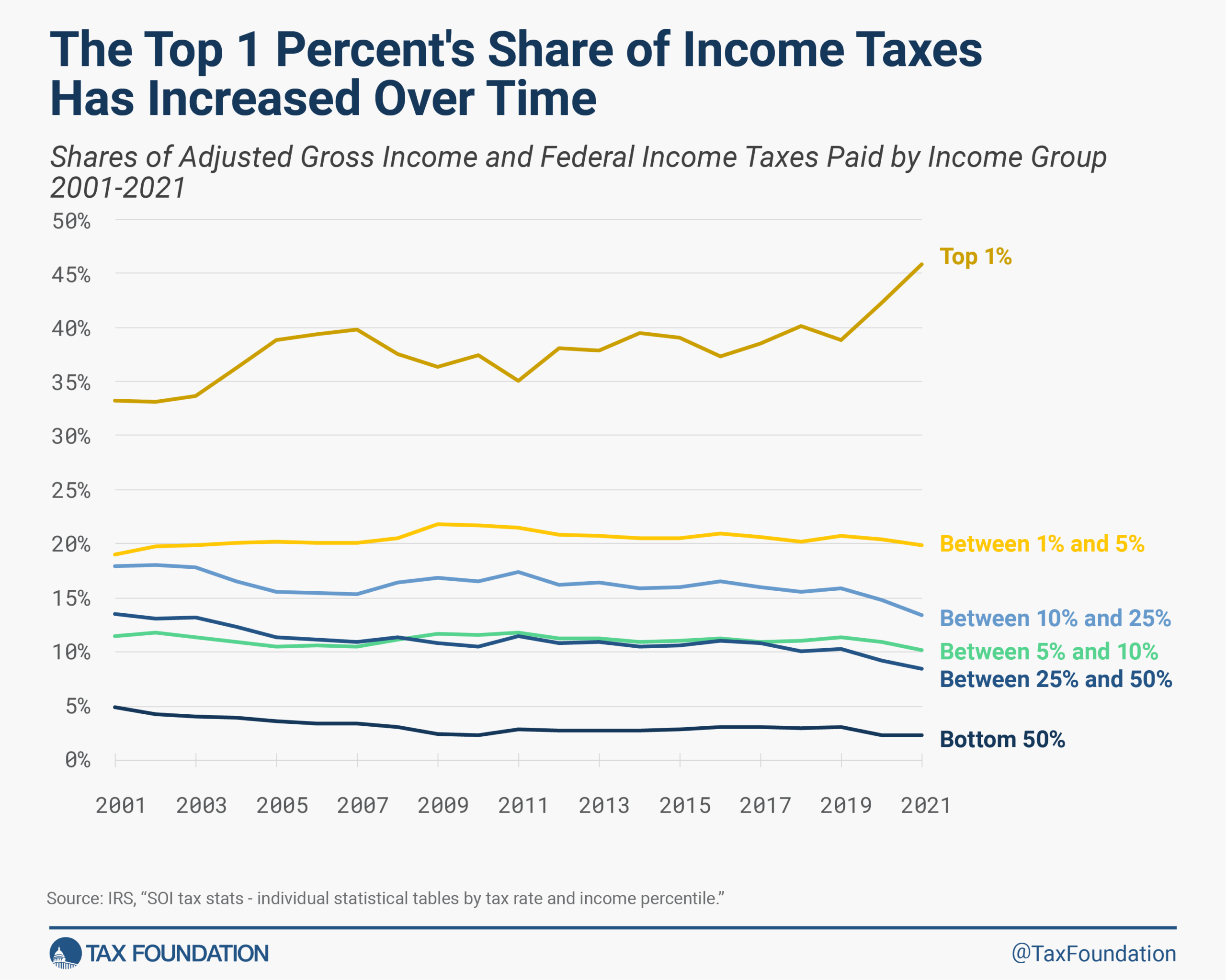
When it comes to the share of income taxes paid by the top 1 percent, the report states that the nation’s highest earners paid 38.4 percent of all income taxes. Meanwhile, the share of income taxes paid by the bottom 50 percent of taxpayers has fallen from 4.9 percent in 2001 to 3.3 percent in 2023.
Is the federal income tax system perfect? Certainly not. There is still plenty of work to be done to make taxes less complicated, more transparent, and fairer. But those who continually call for higher taxes should do a better job of understanding that high-income earners already pay a significant share of income taxes. The U.S. income tax system remains highly progressive and continues to impose higher tax burdens on those who earn more.
As tweaks and adjustments are made to federal income taxes in Washington, D.C., we hope lawmakers and the president will work to make the system easier to understand, easier to comply with, and more transparent about how tax dollars are spent. We know that is a big ask and unlikely to happen overnight. But as the saying goes, you can only eat an elephant one bite at a time. We hope that, in the future, a few more bites are taken.
You can read the full Tax Foundation Report here: https://taxfoundation.org/data/all/federal/who-pays-federal-income-taxes-tax-year-2023/?utm_content=379027521&utm_medium=social&utm_source=twitter&hss_channel=tw-16686673