British sports coach Sir Dave Brailsford is known for saying that if you improve lots of little things by just one percent, the combined effect can create huge results.
That’s the kind of approach Congress should take when it comes to tackling the national debt. There aren’t any big, one-time fixes that won’t risk cutting important programs or raising taxes on families. But if lawmakers look for small, sensible “one-percent” changes, those savings can really add up over time.
One of those small but important changes is how we compensate former presidents.
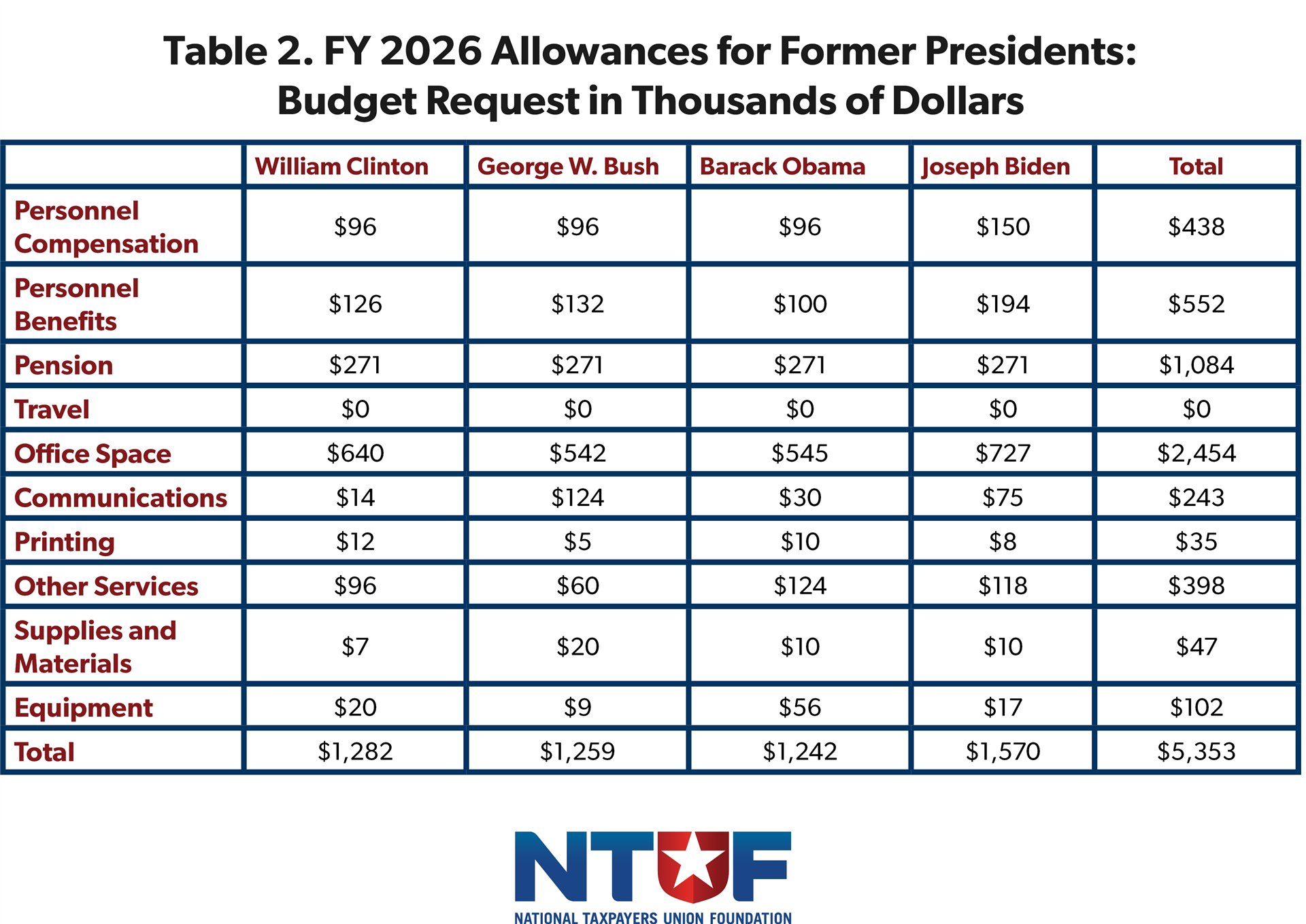
The National Taxpayers Union (NTU) recently reported that since 2000, taxpayers have spent more than $130 million on pensions and perks for past presidents. Each year, about $5.5 million goes toward these benefits. Some requests have been eye-catching—President Jimmy Carter once asked for $560,000 in a single year, and before his reelection, President Trump requested $1.1 million.
Here’s the thing: former presidents are not short on money. According to NTU, Bill Clinton’s net worth is around $120 million, Barack Obama’s is $70 million, George W. Bush’s is $40 million, and Joe Biden’s is $10 million. Of course, we should make sure they’re safe and supported in retirement, but the current benefits go far beyond what’s needed.
Take President Biden as an example—he receives a pension for his Senate service (about $166,000) and another for his presidency (about $250,000). Added together, that’s more than he actually earned as president, when the salary is $400,000. And on top of that, former presidents also get staff, office space, and equipment—paid for by taxpayers.
Thankfully, there’s an effort underway to fix this. Senator Joni Ernst of Iowa has introduced a bill—the Presidential Allowance Modernization Act of 2025—that would put a $200,000 cap on pensions, indexed to inflation. The bill would also reduce payments dollar for dollar once a former president makes more than $400,000 in income. They’d still receive healthcare and Secret Service protection, and surviving spouses would continue to receive support, though at a reduced level.
Congress actually passed a similar bill back in 2016, but President Obama vetoed it just before leaving office.
It’s time to try again. Reforms like this may feel small on their own, but when you stack up lots of these “one-percent” changes, the result is meaningful savings for taxpayers.
FY 2026 Allowances for Former Presidents:
Budget Request in Thousands of Dollars