One major tax burden on small businesses is known as the tangible personal property tax or TPP. It is one of the more disliked taxes among business owners. Recently a prominent business owner in Utah told the Association they call it the “bull-sh**” tax because they spend more time on this tax than any of the other taxes they have to deal with.
TPP is a tax on a business’s machinery, equipment, fixtures and supplies they own. The tax is generally not a huge cost but the cost to account for all of the TPP at a business is a burden for many taxpayers. Unlike property taxes, where the government tells the taxpayer how much to pay, taxpayers carry the responsibility to determine the amount of tax they owe and are also potentially subject to an audit if it is determined one is needed.
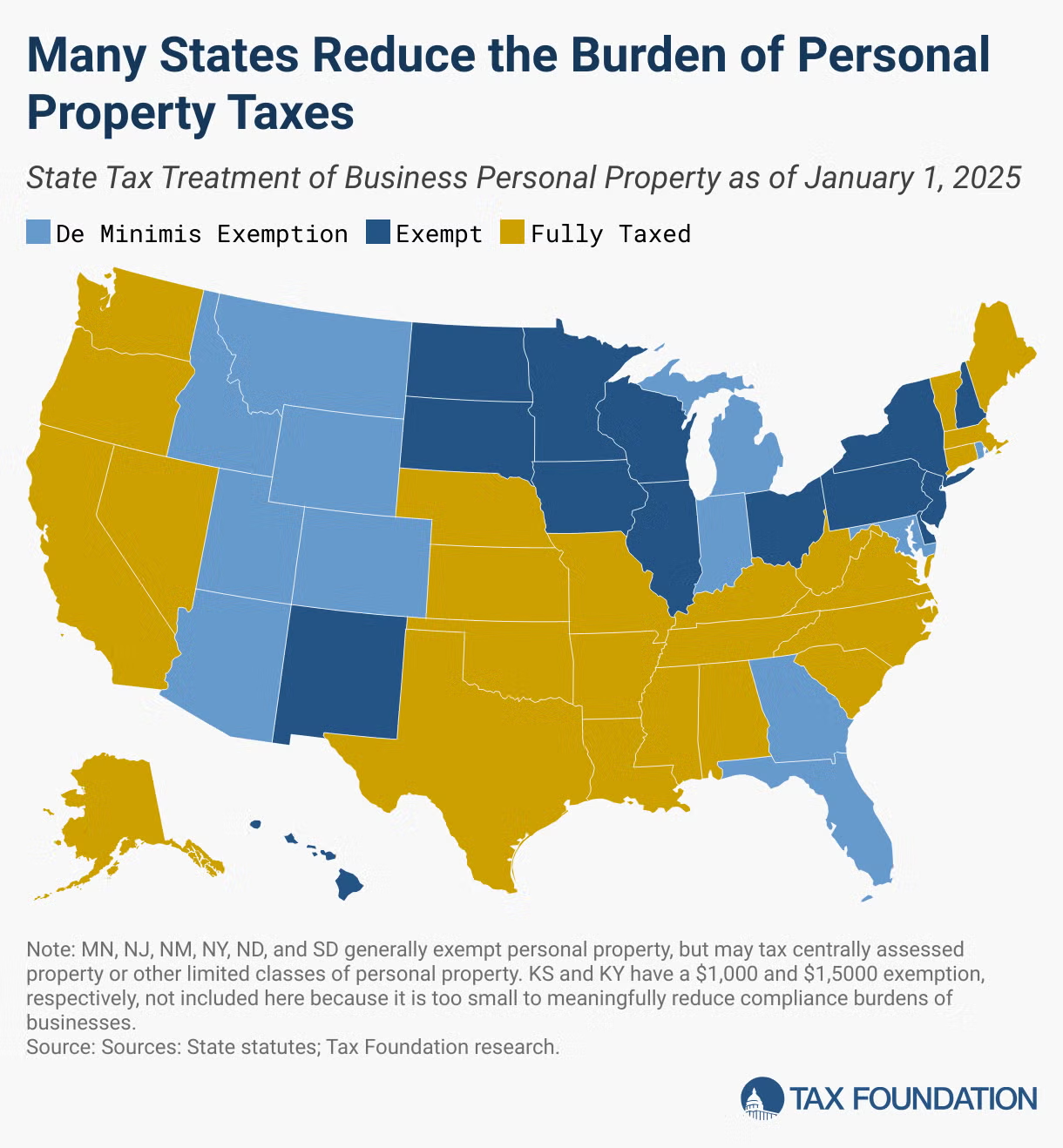
For Utah, the state does have a “De Minimis Exemption” for TPP. The exemption is $29,300 and continues to adjust up each year with inflation. Neighboring states vary on how they handle TPP. Nevada fully taxes its TPP while Arizona has an exemption of $500,000, Idaho exempts $250,000, Wyoming has an exemption of $75,000 and Colorado has an exemption of $56,000 all according to the Tax Foundation.
In the 2025 General Session of the legislature, Rep. Jason Kyle, R-Huntsville, proposed legislation that would have increased Utah’s exemption to $100,000. The bill was never considered but does show there is interest from some in the legislature to discuss increasing the exemption in the future. There have been some concerns expressed that Utah’s “De Mininimis Exemption” is already high and increasing it could bring a court challenge from the government arguing that a larger figure leaves the neighborhood of being simply de minimis.
If any change is considered in the future, lawmakers should craft the legislation such that it is a true property tax cut and not just a shift from one set of taxpayers to another. Under Utah’s property tax law if the exemption is merely increased, it will result in shifting that tax burden to other Utah property taxpayers. A better proposal would be to increase the exemption and allow for that revenue to be lost to the government to make it a true tax cut.
How TPP is managed varies state by state. The Tax Foundation has created this report looking at the issue from a nationwide perspective. The Tax Foundation reminds us that taxpayers’ time is better spent running their business than it is trying to determine the value of office chairs and paper towels.